

By 2026, the digital landscape has arrived at an undeniable inflection point. The explosion of generative artificial intelligence democratized execution, allowing brands to deploy hyper-polished visuals, editorial prose, and synthetic media at near-zero marginal cost. Yet, what Silicon Valley championed as frictionless scaling has triggered an unexpected, sharp cultural counterweight: the AI marketing backlash.
In a marketplace inundated with algorithmic outputs, frictionless perfection has lost its luster. When any competitor can prompt an immaculate, airbrushed campaign in seconds, digital perfection ceases to be a badge of high production budgets—it becomes commoditized noise. For luxury, premium, and heritage brands, this synthetic flood represents an existential challenge. Brand equity is rooted in trust, perceived scarcity, and emotional resonance. When those elements are replaced by generic, automated assets—what critics increasingly dismiss as AI slop in marketing—the intangible value that justifies premium margins evaporates overnight.
As forward-thinking executives look at the defining 2026 marketing trends, a decisive paradigm shift has emerged: visible human effort, tactile craft, and verifiable provenance have become the ultimate luxury signifiers. Modern consumers are no longer dazzled by synthetic abundance; instead, they assign an immense human-made premium to work that demonstrates authentic human authorship.
For CMOs, Marketing Directors, and founders, surviving and thriving in this new climate does not mean abandoning technology altogether. Rather, it demands an intentional architectural evolution: relegating artificial intelligence to backend operational intelligence, while aggressively front-staging human craft, authentic creative direction, and cultural nuance.
The Cost of Synthetic Saturation: Consumer Fatigue and Declining Trust

The rapid commoditization of synthetic media has catalyzed acute consumer fatigue. When every feed and digital storefront presents identical hyper-smoothed renders and rhythmically predictable copywriting, aesthetic homogeneity sets in. Consumers instinctively register this uniformity, leading to deep skepticism regarding brand authenticity and product value.
Recent empirical research validates what premium brand custodians have sensed intuitively. According to the Menlo Ventures Consumer-AI Study, consumer sentiment has polarized sharply against unvetted generative execution:
- 36% of consumers report that they are actively less likely to engage with marketing content upon discovering it was generated by AI.
- In stark contrast, a mere 14% of consumers state that synthetic generation increases their interest or purchase intent.
This data reveals a stark commercial reality: deploying unvarnished, cost-cutting generative content creates an immediate net-negative engagement dividend. For brands trading on high average order value (AOV) and customer lifetime value (LTV), algorithmic shortcuts actively repel buyers.
The Perception of Value Collapse
Beyond basic engagement rates, synthetic production triggers a direct collapse in pricing power. Behavioral economics demonstrates a profound perception-of-value gap: creative work, products, and campaign collateral explicitly framed as “human-made” command a 62% higher perceived value compared to identical or comparable outputs attributed to generative AI.
When consumers perceive that creative execution cost a company zero sweat equity, they assign it zero intrinsic value. This dynamic creates catastrophic consequences for premium branding. When brands deploy synthetic personas or synthetic copy, audiences do not perceive agility—they perceive cynical cost-cutting. Much like the debates surrounding AI avatars vs. human influencers, audiences crave genuine emotional rapport and vulnerability, traits algorithms cannot embody.
The Deception Penalty in Premium Markets
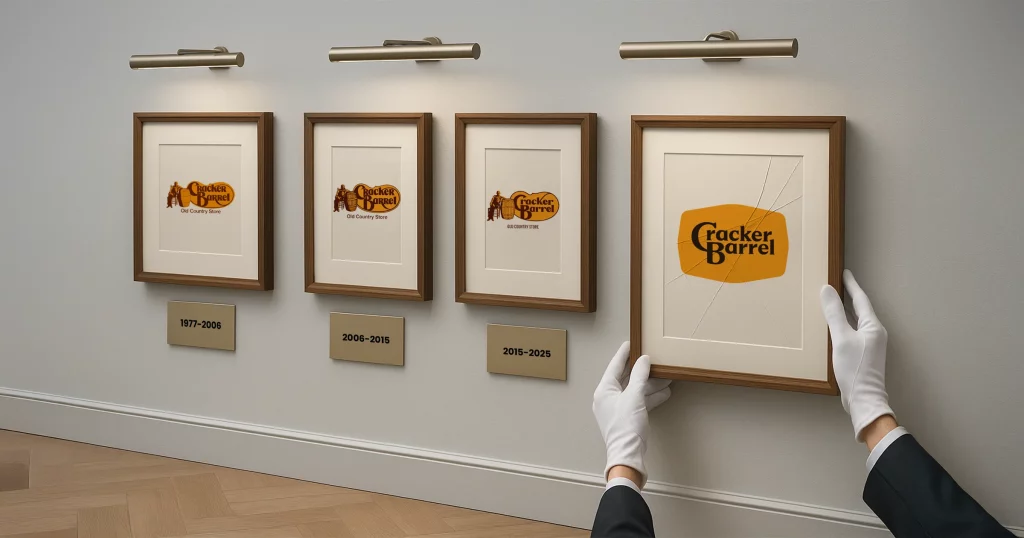
The root driver of this backlash is not an ideological opposition to modern tools, but a visceral rejection of deception, anonymity, and interchangeability. In luxury sectors where trust and lineage are foundational, synthetic missteps trigger swift public relations fallout. We have seen similar brand miscalculations before—from public outcries over misguided identity shifts such as the Cracker Barrel rebrand backlash to chaotic offline operational failures like McDonald’s viral Pokémon promotion meltdown. In the luxury sphere, early synthetic campaigns triggered intense public outrage precisely because they devalued traditional artistic disciplines—bespoke photography, nuanced styling, and literary copywriting—in favor of algorithmic shortcuts.
When a premium label obscures its reliance on generative models, consumers interpret the lack of transparency as a breach of trust. In an era shaped by volatile search ecosystems and automated content curation—where even platforms are navigating how AI impacts discovery, as seen in the evolution of Google’s Search Generative Experience—preserving generative AI consumer trust requires radical honesty about where machines end and human artistry begins.
Craft as Currency: Elevating Provenance and Visible Human Effort

In an economy characterized by synthetic abundance, scarcity changes shape. Frictionless digital execution is everywhere; therefore, effort signaling is the new scarcity. If an algorithm can generate a high-resolution visual in three seconds, that visual carries an economic signaling value close to zero. To command elevated market positions, brands must anchor their creative identity in what cannot be automated: visible human labor, intentional artistic imperfections, and documented provenance.
The Psychology of the “Effort Signal”
The concept of the effort signal is foundational to consumer psychology. When buyers evaluate luxury goods or high-end services, they do not simply assess utility; they assess the expenditure of time, specialized skill, and human dedication embedded within the final creation.
Visible investment of human intellect acts as a proxy for dedication, quality, and prestige. When an asset or experience displays evidence of deliberate human decision-making, it establishes an unspoken emotional contract. Synthetic perfection is free; human effort is the new luxury.
The Aesthetics of Imperfection and Tactility
As algorithms flood the market with hyper-symmetrical, statistically averaged creative, sophisticated consumers gravitate toward the irregular, the tactile, and the organic. The new luxury aesthetic deliberately showcases:
- Intentional Asymmetry and Texture: Raw hand-drawn concept sketches, unvarnished creative drafts, and tangible material swatches that signal human touch.
- Sensory, Material Grounding: Heavy linen paper stocks, physical editorial prints, visible brush strokes, and film photography featuring organic grain and unretouched micro-textures.
- Artistic Deviations: Algorithms naturally optimize toward the mathematical mean of their training data. In contrast, elite creative leadership thrives on subversion, idiosyncratic points of view, and intentional departures from conventional logic. As the saying goes, algorithms optimize toward the median; luxury is defined by the exception.
Verifiable Provenance and Named Authorship
To capture the 62% perceived value premium, leading brands are reimagining their release strategies around verifiable provenance. Faceless brand messaging generated from opaque prompts is being replaced by spotlighted human artisans, master creative directors, and named photographers.
Traceability has become a core brand pillar. Forward-thinking marketing organizations now routinely publish behind-the-scenes documentation—chronicling initial sketch concepts, material selection processes, and editorial debates. By demystifying the labor that went into a project, brands give their audiences tangible proof of craft. This verifiable lineage transforms everyday customer-facing collateral into collectible creative expressions.
The Human-Led, Machine-Assisted Operating Model for Modern CMOs

Faced with consumer fatigue on one side and margin pressures on the other, marketing executives must avoid a false dichotomy. The strategic response to the AI marketing backlash is neither reckless over-automation nor an expensive retreat into analog inefficiency. Instead, the winning digital agency strategy centers on a bifurcated operating architecture: Automate the invisible plumbing; protect the visible poetry.
To balance operational agility with emotional resonance, CMOs must redefine the boundary between marketing automation vs creative expression. Modern leaders must structure their organizations so that machine intelligence operates exclusively as backend infrastructure, while human authorship fiercely governs every public-facing brand touchpoint.
                  THE BIFURCATED OPERATING MODEL

  ┌──────────────────────────────────────────────────────────┐
  │          FRONTEND: THE HUMAN-LED BRAND EXPERIENCE        │
  │  • Bespoke Creative Direction    • Tactile Artistry      │
  │  • Cultural & Emotional Nuance   • Named Authorship      │
  │  • Verifiable Provenance         • Brand Voice & Values  │
  └─────────────────────────────▲────────────────────────────┘
                                │ Governs & Directs
  ┌─────────────────────────────▼────────────────────────────┐
  │        BACKEND: THE MACHINE-ASSISTED INFRASTRUCTURE       │
  │  • Data Pipelines & Orchestration • Multivariate Testing  │
  │  • Audience Clustering & Routing  • Routine Automation   │
  │  • Market Intelligence Synthesis  • Operational Velocity  │
  └──────────────────────────────────────────────────────────┘
Where AI Thrives: The Machine-Assisted Backend
Artificial intelligence remains an unmatched force multiplier when deployed behind the curtain. CMOs should aggressively leverage automation across operational, administrative, and analytical layers:
- Data Orchestration and Journey Routing: Deploying machine learning to analyze customer touchpoints, route CRM lifecycles, and dynamically optimize conversion funnels without diluting the creative core. This balance is critical across all high-performing acquisition channels, as detailed in our analysis of channel performance and long-term marketing ROI.
- Synthesis and Discovery: Utilizing enterprise language models to conduct rapid competitive intelligence audits, distill customer sentiment data, and map out macro industry patterns.
- Operational Velocity: Automating routine task routing, reporting pipelines, and inventory workflows to unlock internal team bandwidth, establishing a productive, frictionless daily operational flow. Consolidations across the martech landscape—such as Adobe’s major strategic moves in brand visibility and search intelligence—reinforce that backend computational power is becoming standard table stakes.
Where Humans Must Lead: The Human-Led Frontend
While backend systems run with algorithmic speed, frontend customer engagement must remain fiercely, uncompromisingly human. The visible surface area of your brand requires authentic human mastery:
- Creative Direction and Authorship: Conceptual storytelling, emotional tonality, and brand narrative cannot be outsourced to probability engines. Master creative directors set the cultural agenda.
- Aesthetic Execution: Editorial photography, bespoke typography, nuanced copywriting, and tactile material collateral must reflect intentional, human-crafted execution.
- Brand Governance: Rigorous human editorial review processes must inspect every external asset, ensuring no synthetic artifacts or hollow copy dilute the brand’s hard-won market prestige.
By streamlining back-office administrative burdens through backend automation, enterprise teams free their elite thinkers, copywriters, and designers to invest deep, focused time into the high-touch creative assets that define market leadership.
Discernment as the Ultimate Strategic Moat
The 2026 AI backlash is not a rejection of technology, but a clarion call for discernment. By strictly separating operational intelligence from customer-facing creative expression, forward-thinking brands can harness the speed of automation while safeguarding the irreplaceable value of human craft. Elevate your brand equity by ensuring every public-facing interaction carries genuine emotional depth, provenance, and uncompromising human authorship.
At 360g, we specialize in elevating premium brands through bespoke creative direction, sophisticated brand identity systems, and advanced backend marketing automation workflows. We bridge the gap between operational efficiency and emotional resonance, deploying enterprise-grade technology to optimize your customer journeys while protecting your hard-earned brand equity. Partner with our elite creative and technical teams to ensure your market presence remains distinct, culturally meaningful, and unapologetically human.