


Direct customer communication remains the backbone of predictable digital revenue. While industry discourse frequently centers on behavioral micro-segmentation, raw broadcast volume continues to anchor commercial performance for modern growth teams. Generative models now allow marketing departments to draft, iterate, and optimize messaging instantly, yet the core operational hurdle has migrated from content generation to high-volume distribution infrastructure.
Maximizing returns requires understanding the structural differences between sequential automated messaging and large-scale broadcasts, diagnosing technical deliverability mandates, and deploying modern sending architecture.
Why Are Email Blasts Still Effective Alongside AI Copywriting?
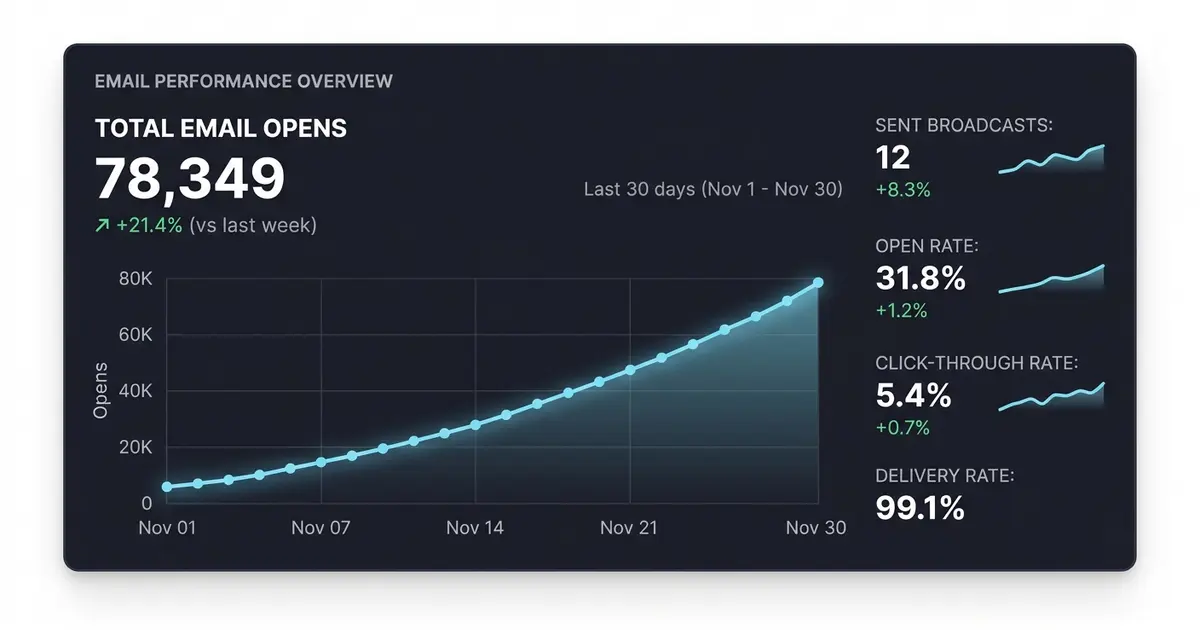
High-volume email blasts remain effective because they allow brands to broadcast seasonal promotions, critical announcements, and editorial newsletters to massive opted-in audiences simultaneously. While artificial intelligence accelerates copywriting and audience analysis, enterprise reach requires dedicated bulk email marketing services to bypass mailbox provider throttling and deliver uniform, time-sensitive revenue events at scale for growing commercial brands.
The Operational Distinction: Broadcast Velocity vs. Micro-Triggers
Automated behavioral sequences serve a specific purpose: they nurture individual customer actions over extended horizons. Welcome drips, browse-abandonment pings, and re-engagement triggers shepherd individual profiles through micro-conversions. However, sequential triggers cannot generate collective commercial momentum.
When evaluating whether are email blasts effective in modern campaigns, the answer rests on simultaneous reach. High-volume bulk email marketing provides distinct commercial advantages:
- Simultaneous Market Saturation: Critical revenue events—such as Black Friday/Cyber Monday promotions, product launches, or flash clearances—depend on synchronized demand. A broadcast activates your entire subscriber base in minutes rather than distributing impressions over weeks.
- Immediate Working Capital: For direct-to-consumer and business-to-business brands, a single calibrated broadcast reliably drives traffic spikes and immediate cash flow that programmatic drip sequences cannot match.
- Operational Agility: Synchronized blasts ensure that rapid operational shifts, platform adjustments, or urgent updates reach all stakeholders instantly without waiting for individualized user events.
Resolving the Generative AI Infrastructure Mismatch
Modern ai email automation has eliminated the creative friction traditionally associated with mass messaging. Natural language processing models generate multi-variant subject lines, refine body copy, and structure product recommendations in seconds. Marketing teams can execute sophisticated creative strategies without manual bottlenecks, maintaining brand authority when applying human-led marketing principles.
Creative efficiency, however, exposes a technical constraint. Generating high-converting copy does not guarantee receipt. If an organization generates personalized, high-intent campaign collateral but routes it through an antiquated bulk email blast service, the receiving gateways filter those messages before subscribers ever see them. Scale requires pairing generative copy engines with high-throughput delivery architecture capable of executing a disciplined email blast strategy.
Acquisition Costs and Channel Ownership
Customer acquisition costs across paid media channels continue to rise alongside algorithmic volatility, as seen across algorithmic shifts like generative search updates. Brands relying exclusively on third-party ad networks experience margin compression and volatile return on ad spend.
Direct subscriber lists represent owned commercial infrastructure. Executing deliberate mass email marketing preserves baseline operational margins, providing small-to-midsize businesses, digital agencies, and e-commerce operators with direct access to audiences who explicitly consented to receive communications.
What Makes Deliverability Harder for Bulk Senders Today?
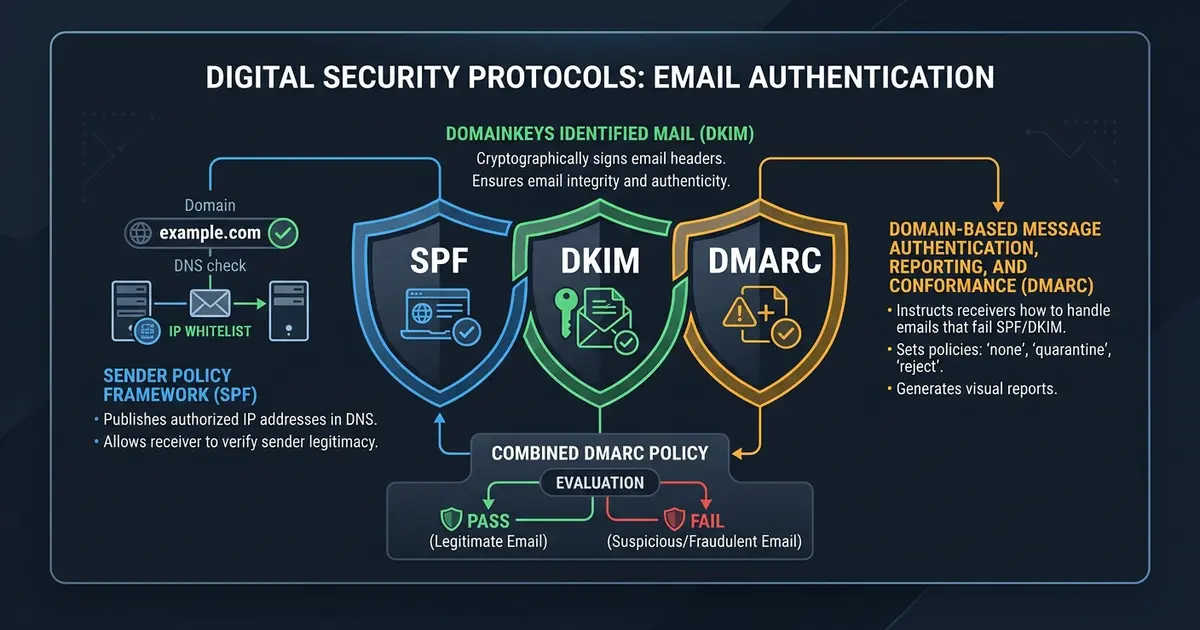
Inbox providers like Google and Yahoo classify organizations transmitting 5,000 or more daily messages as bulk senders, subjecting them to strict authentication and behavioral thresholds. Senders must maintain mandatory SPF, DKIM, and DMARC alignment, implement RFC 8058 one-click unsubscriptions, and keep spam complaints strictly below 0.10% to prevent systemic domain throttling.
The Unified Bulk Sender Directives
Major mailbox providers have codified technical standards targeting any domain sending high volumes to consumer accounts. The 5,000-message daily benchmark is not an abstract target; it triggers automated gateway scrutiny across all incoming traffic from that sending domain.
To preserve inbox placement, organizations utilizing mass email marketing service frameworks must comply with three non-negotiable operational requirements:
- Mandatory Cryptographic Authentication and Alignment:
- Sender Policy Framework (SPF): Must explicitly designate authorized outbound IP addresses for the sender domain.
- DomainKeys Identified Mail (DKIM): Requires robust public-key cryptography (2048-bit keys) validating message integrity between transmission and receipt.
- Domain-based Message Authentication, Reporting, and Conformance (DMARC): Outbound records must define at least a baseline monitoring policy (
p=none) with precise alignment between the visible header “From” domain and the SPF or DKIM signing identity.
- RFC 8058 One-Click Opt-Out Enforcement:
- Broadcast and promotional messages must incorporate standard
List-UnsubscribeandList-Unsubscribe-Postheaders. - Mail clients must present an automated, single-click unsubscribe action within the inbox user interface, and the sending infrastructure must process these revocations within 48 hours.
- Broadcast and promotional messages must incorporate standard
- Strict Spam Complaint Thresholds:
- Senders must maintain verified user spam complaint rates below 0.10% (fewer than one complaint per 1,000 delivered messages).
- Reaching a 0.30% spam complaint rate triggers immediate domain-wide penalties, routing subsequent sends to spam folders or generating gateway-level rejections across the provider’s entire ecosystem.
Why Legacy Platforms Cripple Sender Reputation
Traditional bulk email software products were built during an era of permissive inbox filters. Consequently, their internal architectures present distinct systemic liabilities for modern operators:
- Contaminated Shared IP Pools: Legacy vendors frequently aggregate disparate customers into shared IP environments. When bad actors generate high complaint rates or hit spam traps, every clean sender sharing that pool suffers reputational damage and reduced delivery rates.
- Punitive Contact-Tier Pricing: Traditional software charges organizations by total database size rather than active throughput. This billing structure penalizes growing lists, forcing teams into arbitrary list pruning that discards monetizable contacts.
- Passive Bounce and Suppression Management: Legacy systems process soft and hard bounces reactively. Modern deliverability requires automated, real-time suppression handling to remove problematic addresses before they damage domain health.
- DNS Misconfiguration Vulnerabilities: Older platforms frequently leave domain alignment to manual client configuration, leaving sending domains vulnerable to DMARC failures and subsequent mailbox filtering.
How Does Lyttix Blast Solve High-Volume Email Marketing Challenges?
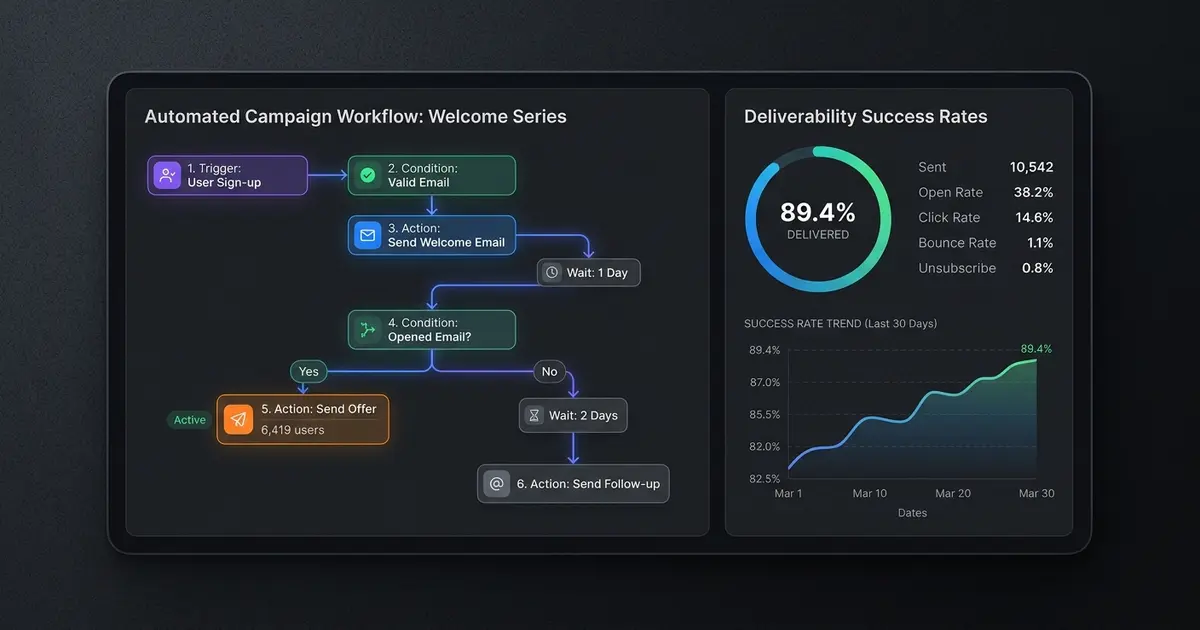
Lyttix Blast by 360Grow and Lyttix Solutions Inc. resolves high-volume distribution challenges through proactive deliverability engineering, cloud infrastructure scalability, and intelligent suppression management. The platform enforces strict authentication compliance, automates list hygiene, optimizes sending throughput, and eliminates punitive contact-tier fees, allowing growing brands to execute large-scale email blasts that reliably clear modern mailbox provider thresholds.
Engineered Deliverability Infrastructure
Executing successful high-throughput campaigns demands purpose-built architecture. Lyttix Blast addresses mailbox provider requirements through native engineering rather than third-party patches:
- Built-in Sender Compliance: The platform manages SPF, DKIM, and strict DMARC alignment at deployment, eliminating manual DNS errors that degrade domain reputation.
- Automated RFC 8058 Integration: Every outgoing broadcast automatically embeds necessary header protocols, processing opt-out events instantly to satisfy Google and Yahoo 48-hour enforcement rules.
- Continuous Reputation Monitoring: Native postmaster telemetry tracks gateway responses in real time, detecting anomalies before reputation degradation impacts core sending domains.
- Automated IP and Domain Warm-Up: When establishing new infrastructure or expanding capacity, automated schedules ramp outbound message volumes steadily. This structured pacing prevents automated spam filters from interpreting sudden volume increases as abusive activity.
Advanced Audience Segmentation and Data Hygiene
Modern deliverability requires disciplined data management. Lyttix Blast functions as a comprehensive bulk email service for small business operators, marketing agencies, and scaling e-commerce brands by unifying broadcast power with precise audience segmentation:
- Smart Suppression Handling: Hard bounces, repeated soft failures, and passive addresses are automatically isolated, keeping domain complaint rates well beneath the critical 0.10% ceiling.
- Dynamic Behavioral Filtering: Marketers can instantly construct functional segments based on customer purchase recency, click patterns, and operational criteria. Dynamic segmentation allows operators to deploy large-scale broadcasts that maintain contextual relevance for distinct audience subsets.
- Structured Campaign Automation: Growth teams can connect large-scale promotional blasts to follow-up automation sequences, creating reliable productive working flows that bridge immediate broadcast cash flow with sustained customer retention.
Operational Comparison: Legacy Platforms vs. Lyttix Blast
Understanding the structural differences between legacy email software and modern sending infrastructure is essential for brands scaling their operations:
- Authentication and Configuration:
- Legacy Systems: Basic SPF setup; manual, disparate DKIM key generation; inconsistent DMARC guidance.
- Lyttix Blast: Full programmatic SPF, DKIM, and strict DMARC alignment enforced across all outbound pipelines.
- Delivery Protocols and Unsubscribe Compliance:
- Legacy Systems: Basic body unsubscribe links; manual processing intervals often exceeding 7 to 10 days.
- Lyttix Blast: RFC 8058 native one-click list-unsubscribe headers processed automatically in under 48 hours.
- Spam Rate Mitigation:
- Legacy Systems: Reactive reporting after mailbox providers throttle delivery rates.
- Lyttix Blast: Real-time tracking and automated suppression rules designed to keep complaint metrics safely below 0.10%.
- Cost and Scalability:
- Legacy Systems: Punitive pricing based on raw contact volume stored, penalizing audience growth.
- Lyttix Blast: Transparent, volume-aligned economics designed for scaling e-commerce platforms and expanding agencies.
As the broader digital marketing landscape shifts—marked by enterprise consolidations like Adobe’s acquisition of industry tools—owning your direct audience pipelines is critical for maintaining commercial sovereignty.
High-volume email marketing remains a powerful engine for growth when brands abandon restrictive legacy tools and adopt modern infrastructure. By prioritizing rigorous authentication, list hygiene, and scalable platforms like Lyttix Blast, marketers can safely broadcast campaigns to massive audiences. Ditch outdated software today and maximize your inbox placement.
Ready to run smarter, high-deliverability email blasts without runaway per-contact fees? Explore Lyttix Blast or book a demo with 360Grow today.